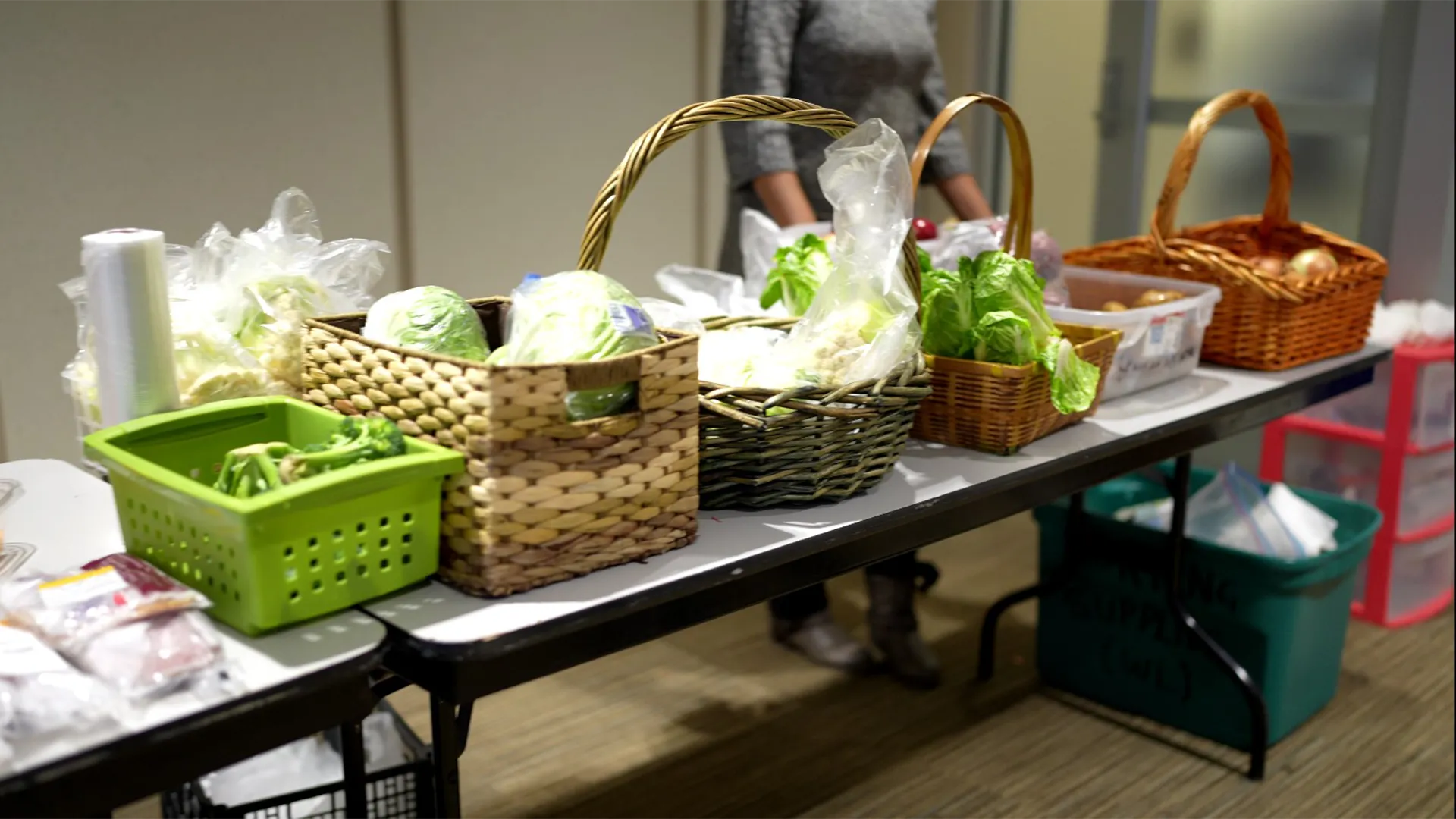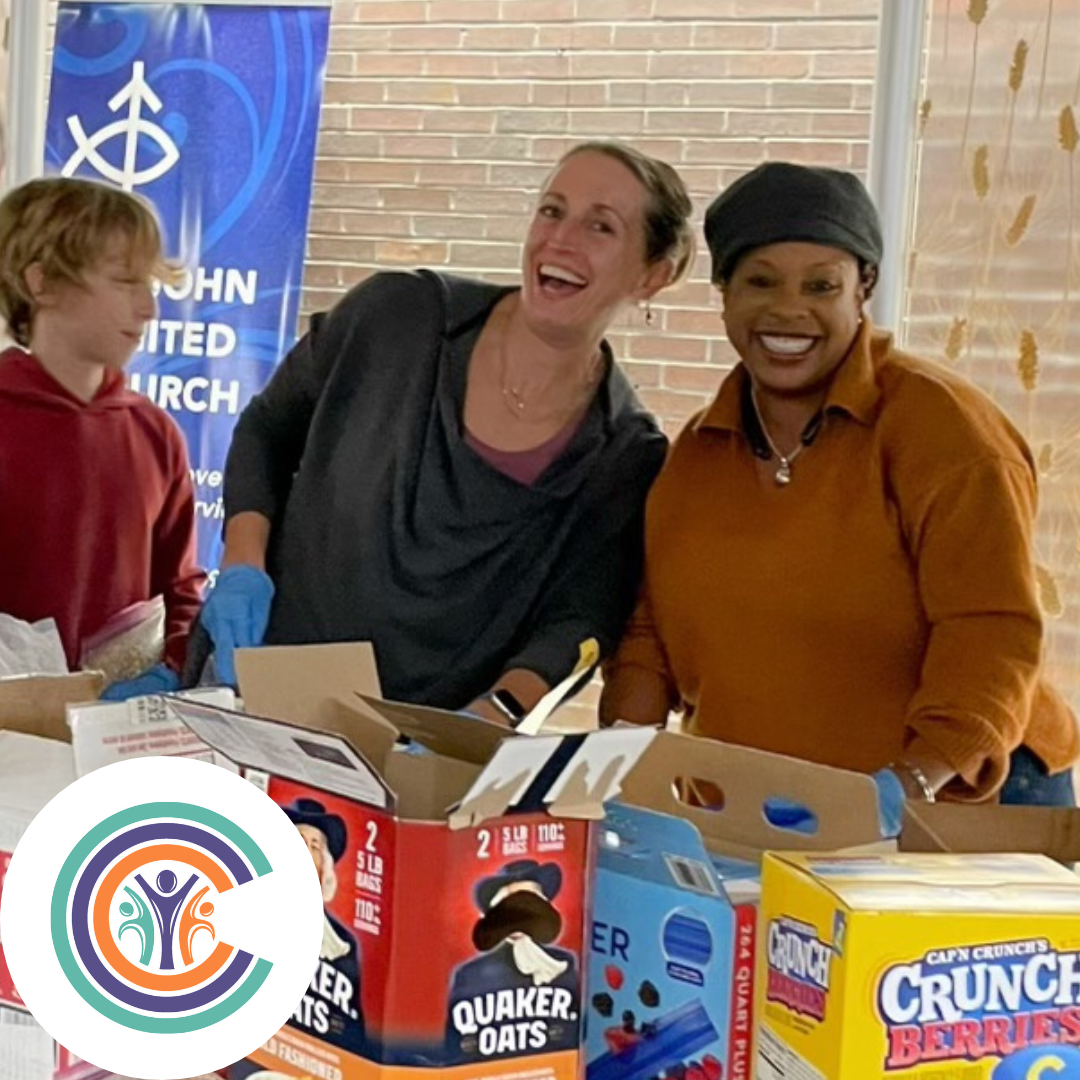
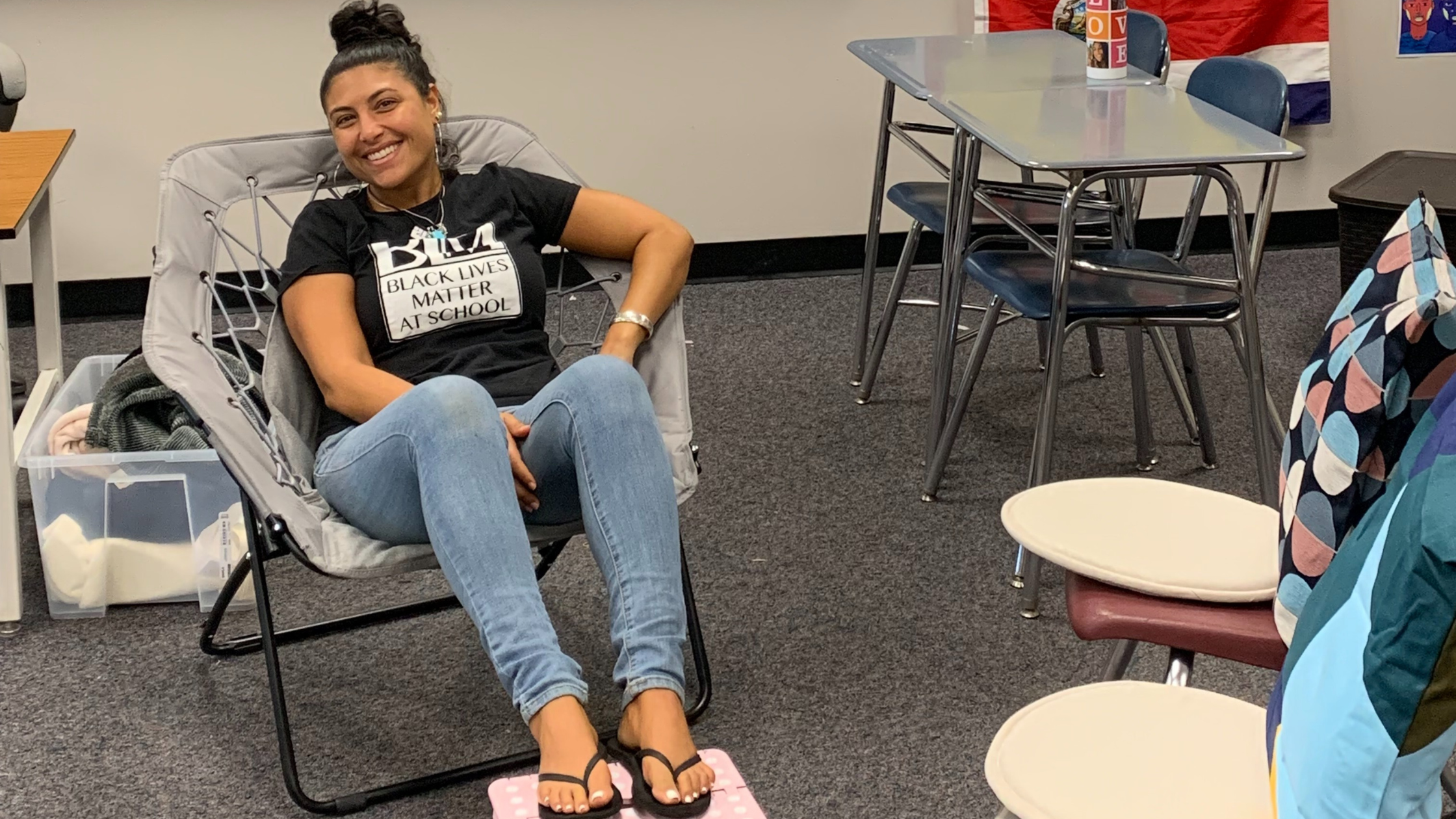
For more than five years now, thousands of Howard County residents have been able to access healthy, fresh, and delicious culturally-diverse cuisine for free thanks to Columbia Community Care Inc. (CCC), a nonprofit organization founded by Erika Strauss Chavarria during the Covid-19 pandemic. At the time, Strauss Chavarria was a high school Spanish teacher at Wilde Lake High School, and like most Americans, thought the buzz about Covid meant just two weeks off of school. However, that nervous excitement quickly changed when reality set in about the deadly virus causing school closings along with mandates, curfews and quarantines.
“It was scary, and there was definitely a tipping point when we all realized everything we knew was about to change,” recalls Strauss Chavarria. “My students were wondering what would happen to their jobs and their parents’ jobs, and where they were going to get food because many of them rely on school breakfast and lunch meals.”
Strauss Chavarria understands economic barriers and challenges in Columbia having seen it firsthand growing up in Columbia. She first moved to Columbia, Maryland, from New Mexico at age 6. Her parents were educators at the University of New Mexico—her mom a professor of curriculum and multicultural education, and her dad a professor of linguistics before he switched careers to medicine. His medical residency brought the family back to the East Coast, closer to grandparents living in New York who could also help with her newly born baby brother while her mother taught elementary education and educational technology and literacy at Towson State University.
“Born in the Bronx and Brooklyn, but both raised in Queens, my parents talked a lot about how they grew up in predominantly working class Jewish neighborhoods and my mom always expressed to me how she was fortunate to attend a very diverse high school, which helped shape her as a human being,” says Strauss Chavarria. “My parents wanted me and my brother to have the experience of living in a religiously, racially, ethnically and socioeconomically diverse community.”
Parents: The Original Influencers
Strauss Chavarria says her parents intentionally chose Columbia after reading about its diversity, and they were specific about the neighborhood so their kids could attend Wilde Lake High School, which continues to be one of the most diverse high schools in the Howard County Public School system. Though both parents had stable careers, her family faced financially challenging times. Even today, she and her husband, who live across the street from the school where she worked, find themselves struggling some months, trying to find ways to support themselves and their family.
She thanks her parents for an early childhood in New Mexico that was full of exposure to Indigenous New Mexican culture and values, including Pueblo and Navajo traditions. Strauss Chavarria learned gratitude for the blessing of mother nature and how to understand, appreciate, and respect land as well as the reciprocal relationship between the earth and people who live on Earth. Her arrival in Maryland was quite a culture shock, even at age 6.
“When I first moved to Maryland, I remember driving around Baltimore City, and there was a lot more homelessness than what I saw in New Mexico,” she says of the difference between her experiences living in the two states back in 1988. “That month, I gathered friends together and we made one thousand peanut butter and jelly sandwiches and bagged lunches, and took them around to people who were in need.”
That need to do something when she sees an injustice has been instilled in her from a young age. Though none of her grandparents had the opportunity to go to college, they always made sure education was a top priority. Strauss Chavarria’s parents grew up in working-class families with both her great grandparents and grandparents working as laborers, relying on unions to ensure fair wages and good working conditions. Her great grandfathers worked in the garment industry sweatshops, as restaurants workers, and as an elevator operator. Her paternal grandfather worked in restaurants, while her maternal grandfather worked in jewelry factories. In fact, her grandfather was fired from a jewelry factory for trying to organize a union. In the 60s, her parents were heavily involved in anti-Vietnam War efforts as well as the Civil Rights Movement. Their experiences set the foundation for their kids’ values: education, valuing working class families and fighting for justice.
“I feel deeply every emotion as I always try to imagine myself in someone else’s shoes, and it absolutely kills me to see people suffering,” says Strauss Chavarria. “It’s embedded in my blood; if one person in a community is unwell then we are all unwell.”
In her TEDx talk, Strauss Chavarria quotes the traditional Maasai warrior greeting, which acknowledges the high value always placed on children’s well-being. Whether they have children or not, they always ask, “And how are the children?” because if all the children are well, then life is good. When the pandemic exposed the harsh realities of children’s hunger in one of the country’s consistently ranked affluent counties, she knew she had to do something because her students are not just her neighbors, they’re like family.
Educating With Purpose
“Building relationships with students and their families is one of the most important things I did as a teacher,” says Strauss Chavarria. “Students need to know you not only care about them but love them. That’s how you build trust and mutual respect and know they feel safe and affirmed because you really see them.”
Strauss Chavarria has always made it a point to ensure her students felt seen, heard and understood. Though her attempts to teach Latin American studies and social movement classes were thwarted due to a higher demand for Spanish electives, she still found a way to make her classes of majority Black students feel connected and valued to their heritage. She taught Spanish through a history lens, incorporating Afro- and Indigenous-centric artifacts and multimedia. Whether it was learning about the African influence in Latin America; influences in politics and marooned and enslaved communities like in Colombia where Afro-Latino leaders fought oppressors, fled chattel enslavement, and established free communities; or discussing social justice movements using Spanish language and grammar, Strauss Chavarria intentionally connected mandated curriculum to the overall content.
“It was important to me to always create substance and context for my students beyond simply learning the Spanish language,” says Strauss Chavarria. “Of course, they learned how to speak, read and write in Spanish, but my students also learned how to analyze data demonstrating inequities in school systems and how to fight for their rights in Spanish.”
Her in-class approach mirrored the important work she was doing outside the classroom. A community organizer heavily involved in educational and racial justice work, Strauss Chavarria had been fighting for culturally-responsive curricula instead of punitive punishments for Black and brown students. Alongside fellow educator and CCC Board Member Matthew Vaughn-Smith, the duo got into some good trouble disrupting the status quo in Howard County Public Schools, bringing awareness, advocacy and actual results to the county and its teachers union. She also served as advisor for her school’s student-led social justice club as well as for Howard County for Justice, which organized the largest protest ever in the county following the murder of George Floyd.
Organizing for Change
When the coronavirus was going to shut down schools, Strauss Chavarria was not going to sit by idly watching the impact on her community. Three days before schools closed, she posted a Facebook message asking who was going to join her in feeding students, the children of Columbia, and their families. Pleasantly shocked by the response of people she knew and even more by the response of those she didn’t know, people from every walk of life stepped up and jumped into action. Focusing first on hunger relief at a time when students and their families felt most scared and vulnerable, Columbia Community Care was born.
Strauss Chavarria recalls how organically everyone came together. When she later asked volunteers about their experience, they expressed that the opportunity helped them feel productive and at least go through part of the day without fear. Others shared volunteering kept their mind off of what was going on and helped them feel community-minded. Many said volunteering helped with their mental health. Whatever the reason, Strauss Chavarria remains grateful.
The initial two weeks were chaotic as she and Meg Feroli worked to set up operations, ensuring to keep the grocery pickup sites accessible and free of police, applications and proof of finances or identity. Practically riding the bicycle as they were building it, they identified a need for on-site translators as well as delivery options for those in quarantine, elders and immunocompromised individuals. She also worked with volunteer Jessica Nichols to create special baskets for scared pregnant and new moms who needed baby items. Together, the growing team maneuvered to meet every new health and safety requirement while intentionally eliminating any obstacle as the pandemic unfolded.
“I honestly thought we’d collect a week’s worth of donations and feed people for that one week,” she says. “I never expected what it turned into.” Feeling humbled and blessed to have been able to start something with so many others, Strauss Chavarria knows it would have been impossible without the amount of people risking their lives to volunteer during the pandemic and those who continue to support the organization and its mission. She also recognizes the restaurants, farmers and other local businesses who donated to and supported efforts to feed Howard County’s residents, creating partnerships that continue to thrive five-and-a-half years later.
CCC takes pride in responding to urgent needs, which is why the organization has expanded beyond hunger relief. While still focused on keeping people alive and changing lives, Strauss Chavarria has a goal of creating systemic change so there won’t be hungry people who need her organization. That, she says, starts with young people. “Once an educator, always an educator,” Strauss Chavarria partnered with youth mentoring programs to provide support and create change for Howard County families. Under her leadership, CCC also developed community workshops for women and mothers as well as opportunities to shift culture and address social and emotional well-being of county residents. Her vision is to bring more safe spaces to Columbia, and actualization is already underway as CCC and partners build The Source, a community center for all.
“The Source is literally a dream come true,” she says, bubbling with anticipation after having woken up in the middle of the night to write down the idea she dreamed about. “So desperately needed, especially for young people who have faced traumas, The Source will become the heart of our community, not only easily accessible but also brimming with a culturally-responsive space full of support and love for anyone who needs it.”