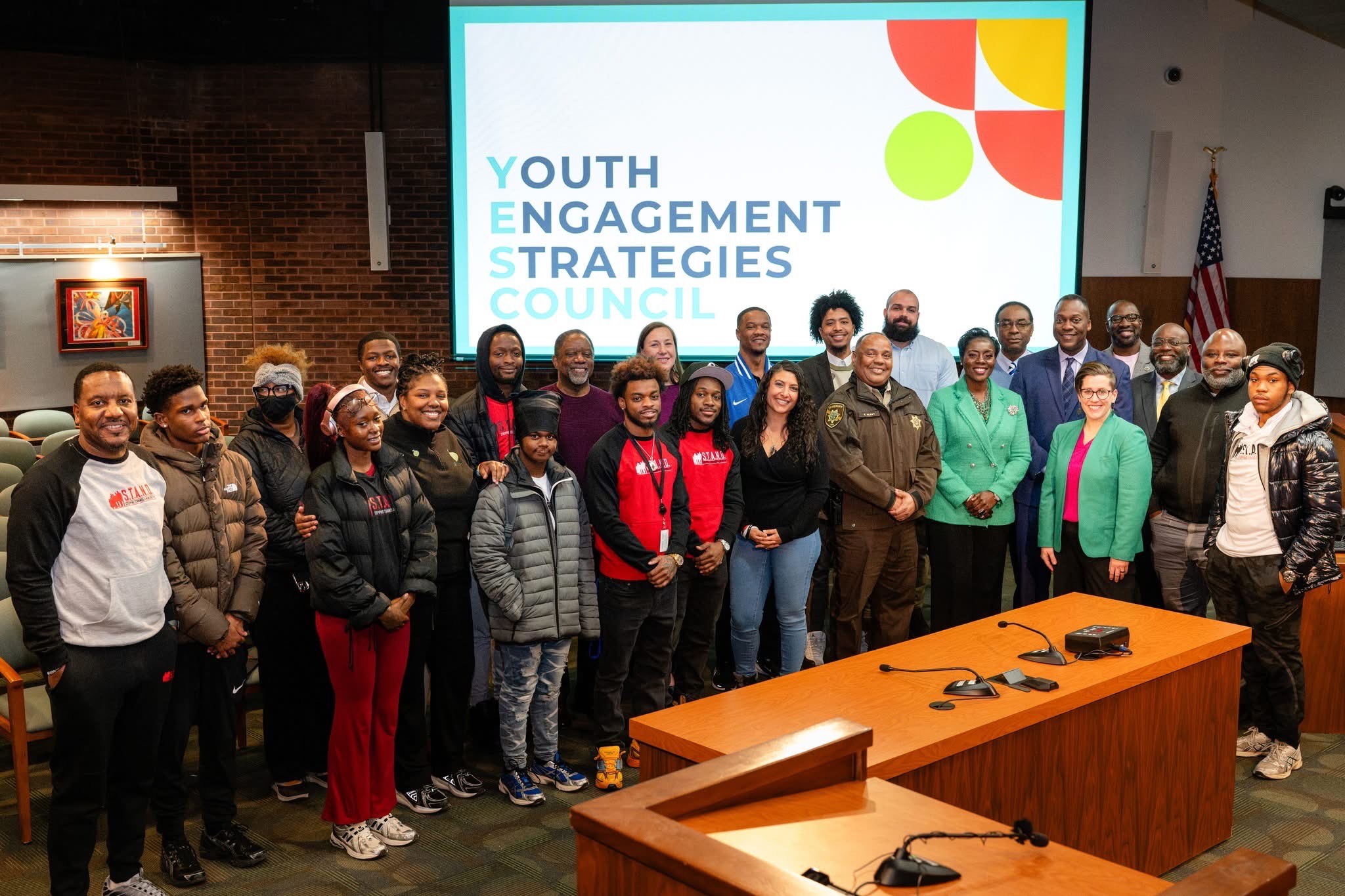
On December 1, 2025, Columbia Community Care Executive Director Erika Strauss Chavarria stood before community members, county leaders, and young people to present the final report of Howard County’s Youth Engagement Strategies (YES) Council. The report, Transforming Youth Outcomes through Restorative Justice, is the product of months of listening, data analysis, and courageous truth-telling by youth leaders, mentors, educators, service providers, faith leaders, and community members who refused to accept the status quo.
“This report exists because too many of our young people have been forced to survive systems that were never designed to protect them,” Chavarria said in her remarks. “Our young people are not broken. The systems responding to them are.”
The YES Council was established by County Executive Calvin Ball in March 2025, bringing together more than two dozen community leaders from across Howard County to assess how the county engages and supports its young people. CCC was proud to serve as a council member alongside this remarkable group of advocates, all united by a shared belief: Howard County must move from reactive, punitive responses toward prevention, healing, and belonging.
Behind the Rankings, a Different Reality
Howard County is consistently ranked among the wealthiest and “happiest” counties in the nation. Its school system boasts a 93.5% graduation rate. But when the data is disaggregated by race, a very different picture emerges — one that demands our attention and our action.
Black students in Howard County Public Schools are six times more likely to be suspended than white students, despite both groups representing 30% of total enrollment. Black students account for 63% of all suspensions while white students account for just 10%. Research shows that just one suspension before high school graduation triples a student’s likelihood of entering the juvenile justice system.
“As a former educator, this school system data is not just numbers, it represents real students to me, who I had the honor of getting to teach, and often earned their trust to hear their life experiences and stories “ said Chavarria. “This is why CCC partner programs like STAND and PUSH, which focus on mentorship of at-risk youth, must be fully funded.”
Juvenile cases in Howard County have surged. Between FY2021 and FY2025, misdemeanor cases among young people grew by 93%. Felonies and crimes of violence also increased, with a notable spike in FY2024.
And here’s the number that should stop every policymaker in their tracks: it costs $241 per day to incarcerate a young person, compared to just $75 per day to support them through a community-based diversion program. We are spending more to punish our children than it would cost to help them.
Yet, programs like STAND and PUSH that focus on proactive, preventative interventions are making a measurable difference in these numbers. In summer of 2025, the inaugural United We STAND summer program brought together 32 teens who were at-risk for getting into trouble with the law in the future. The program focused on life and communication skills, financial literacy, mentorship, health and healing, and career insights. Results indicate that the teens’ financial literacy awareness increased and their social IQ improved. United We STAND court-referred participants also had zero new arrests or repeat offenders.
“I’ve learned so much from the coaches, the people around me and the program itself,” said one of the mentees. “Now, thanks to the STAND program, I’ve learned how to manage my emotions in the safest way possible.”
A Vision for a Restorative Community
The YES Council’s report doesn’t just diagnose the problem. It offers a framework for transformation rooted in five guiding beliefs:
Communities should not be blamed for system failures. Public institutions, such as schools, government agencies, and law enforcement, must examine and reform their own policies rather than shifting the burden to families and grassroots organizations.
Prevention must be prioritized over reaction. Resources are too often mobilized only after a crisis. Redirecting investment toward early intervention, mentorship, and mental health supports reduces long-term costs and changes lives.
Youth wellness is every system’s responsibility. This work cannot be siloed within schools or nonprofits alone. Public safety, housing, recreation, workforce development, and health all shape the conditions in which young people grow.
Howard County is resource-rich, but alignment is critical. The county has no shortage of programs and organizations dedicated to youth. But duplication, fragmentation, and lack of coordination limit their collective impact.
The ultimate goal is a restorative community that centers relationships over punishment, accountability over blame, and collective responsibility over isolation. Restorative justice, rooted in Indigenous philosophy, offers a cultural framework for how a community defines justice, safety, and wellness.
What the YES Council Report Recommends
The YES Council put forward a bold, concrete set of strategy recommendations. Among them:
A violence prevention and harm intervention program modeled on initiatives like Safe Streets Baltimore, deploying trained responders to mediate conflicts and connect youth to services before law enforcement involvement is required.
Restorative justice practices expanded across schools, community spaces, and the juvenile justice system, prioritizing relationship-building and trust, especially with those most affected by systemic harm.
Newcomer welcoming programs and tenant rights training to ensure families new to Howard County are oriented, connected, and supported from day one — work that aligns directly with CCC’s commitment to serving our immigrant and newcomer neighbors without barriers.
Youth workforce development through locally funded initiatives that provide training, mentorship, and paid employment, filling gaps left by federal program cuts.
A Youth Reparative & Reinvestment Fund supported by cannabis tax revenue, directing resources to communities disproportionately impacted by the War on Drugs.
Ethnic studies curricula in Howard County Public Schools and Howard Community College to promote cultural awareness and belonging.
And critically, the implementation of the 2020 Racial Equity Task Force Report — recommendations the county has already received but has yet to fully act on.
The report also calls for the YES Council itself to be institutionalized as a permanent advisory body, ensuring ongoing accountability and youth representation in county decision-making.
The Challenges We Must Name
To its great credit, the YES Council report does not shy away from naming the barriers standing in the way of this vision. Existing county policies are often built around compliance and control rather than prevention and care. Political hesitation and competing priorities have limited decisive action on restorative and equity-centered strategies. And the county’s cherished image as a prosperous, high-performing community has, at times, become a shield against confronting the raw realities of inequity, youth violence, and systemic racism.
The report also names a truth that CCC and other community organizations know well: Black-led organizations doing the most critical, grassroots work for vulnerable families often face disproportionate barriers to recognition, trust, and equitable funding and are frequently required to “prove” their legitimacy in ways not demanded of others. This was made apparent in the Horizon Foundation and Women’s Giving Circle of Howard County’s recent report, “Elevating to Evolve: Stories of Wisdom, Excellence and a Call for Change from Black Women Nonprofit Leaders in Howard County.”
As Chavarria said in her remarks: “This report must not be treated as a feel-good document. It cannot be tucked away in a desk after today or used to justify yet another task force to analyze data we already know. It is a roadmap.”
Our Commitment
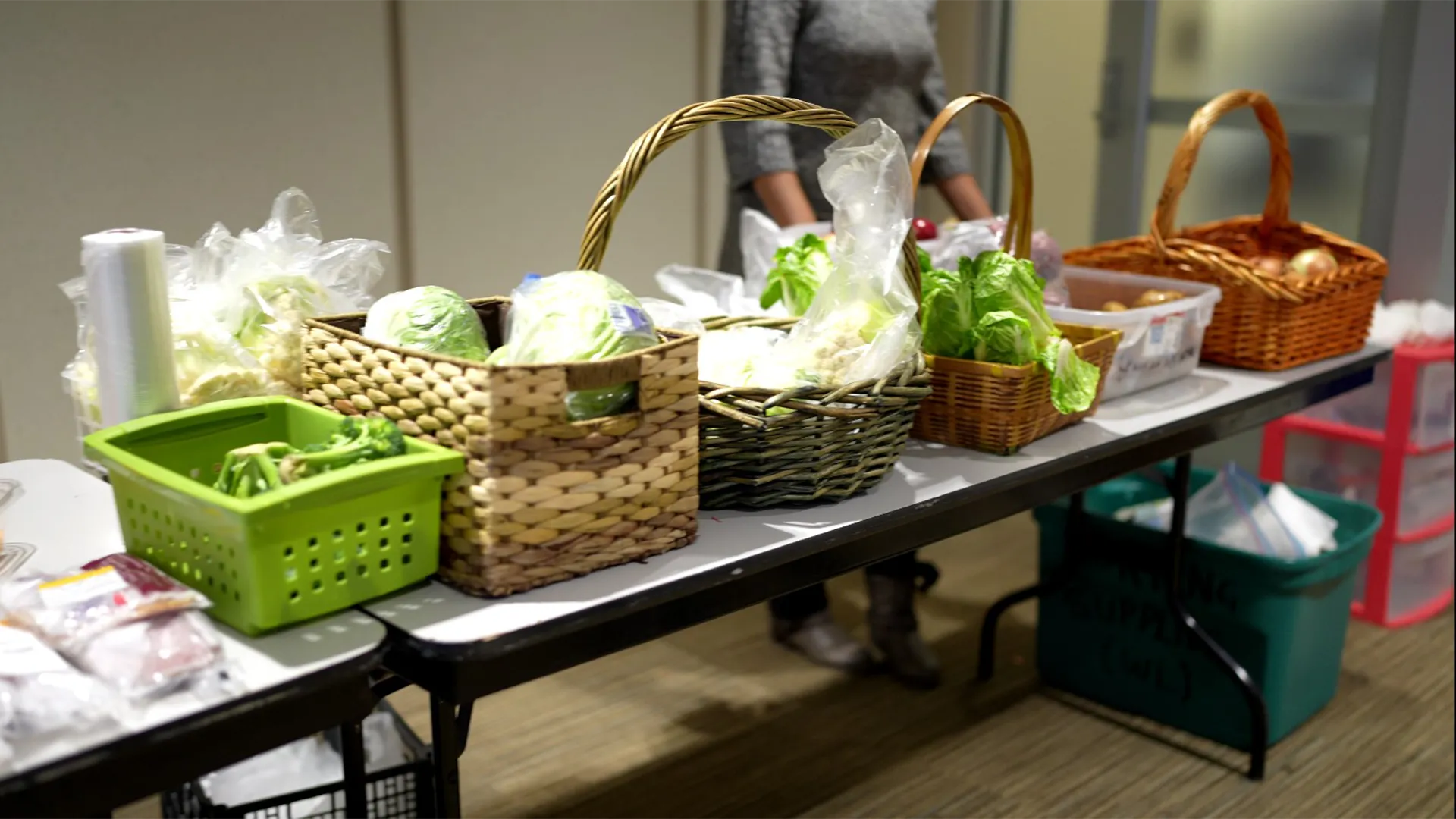
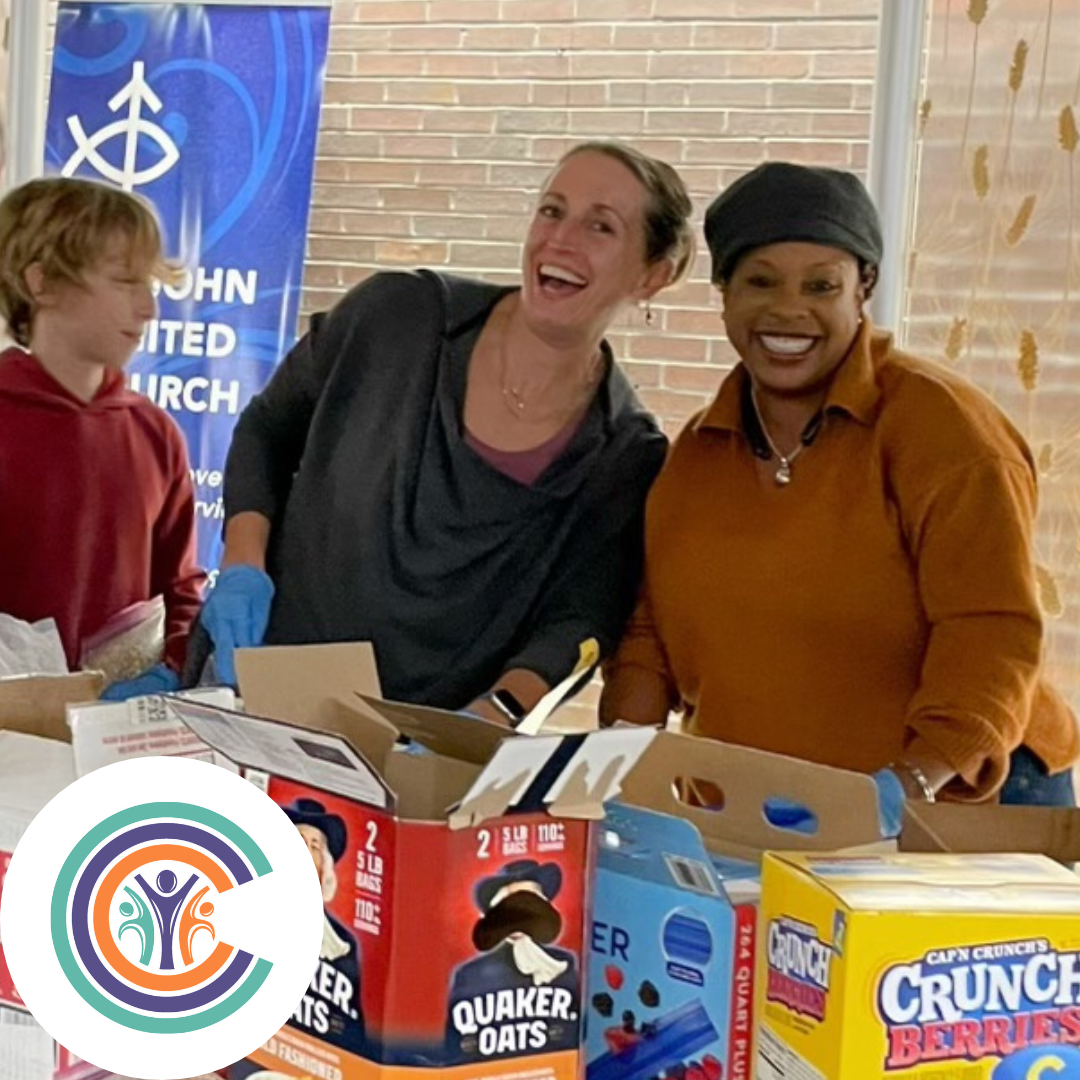
At CCC, we see the YES Council’s vision reflected in everything we do. These are the same families and communities CCC serves every week, ALICE households navigating systems that were not built with them in mind. This data is not abstract to us. It has names and faces. It shows up at our pantry doors, in our programs, and in the stories our neighbors share with us.
We have always believed that when one person in a community is unwell, we are all unwell. This report affirms what our community has been telling us, and what our young people have been saying with absolute clarity: they need systems that respond with care, not control. They need investment, not incarceration. They need us to act now.
Maryland currently ranks second in the nation for the incarceration of Black men and second for charging and incarcerating young people in adult prisons. Chavarria reminded us of that sobering reality, and of what’s at stake if we fail to act: “We cannot continue to be reactionary when the literal lives of our young people are at stake.”
This moment requires courage. It requires moving resources, changing policies, and trusting communities, especially those most impacted, to lead. Our young people deserve more than promises, pilots, and press releases. They deserve a community willing to act with urgency, integrity, and love.
We stand behind this work because we believe every young person’s life is worth protecting. And we are committed to doing the work — not later, not incrementally, but now.
Read the full YES Council report: Transforming Youth Outcomes through Restorative Justice (PDF)
Support CCC’s work in Howard County: Donate to Columbia Community Care
Get involved: Volunteer with CCC, attend our upcoming events, or contact your county representatives to advocate for the YES Council’s recommendations.