Our first multilingual visitor survey reveals what it means to face food insecurity in Howard County — and what CCC’s role looks like from the inside.
There’s a question that only people who experience food insecurity can actually answer: What does it actually feel like to depend on food assistance in Howard County? What difference does CCC make in your week? In your life?
So, we asked. In March 2026, we deployed our first multilingual visitor survey across all three CCC sites. Sixty-five community members completed it, in six languages. What we learned confirmed some things we hoped were true, surfaced needs we’re still working toward, and offered us a few moments of testimony that we’ll carry for a long time.
The People Behind the Numbers
It’s easy to quantify the need in terms numbers. ALICE households in Howard County, number of public school students who depend on Free and Reduced Meals, income and poverty levels… but those numbers don’t tell the story of what people are actually experiencing, or what support from CCC means in real life. Here is what we learned:
CCC helps families feel confident that they won’t run out of food before the week ends, with more than three-quarters of the respondents agreeing with the statement “My household has enough food to get through the week.” For families managing part-time wages, unemployment, and household sizes averaging 3.5 people, that is not a small thing.
Food security is not just a physical condition. It is an emotional one. Hunger creates anxiety, disrupts sleep, concentration, and relationships. 86% of respondents told us that receiving food from CCC helps them feel less anxious, giving them a measure of mental peace that ripples through every part of their lives.
Perhaps the most powerful data point in our survey: nearly 90% of respondents said that CCC’s services helped them avoid choosing between food and other basic needs, such as rent, utilities, and transportation.
Who’s Coming Through Our Doors
More than two-thirds of respondents were unemployed, working part-time, or unable to work. Fifty-five percent visit CCC every week. And 52% support households of four or more people, which means the reach of a single weekly visit extends far beyond the person who walks in.
We estimate that our 65 survey respondents represent more than 225 people in their households. This is just a snapshot of one day at our sites.
Respondents came from across the Howard County community: Black/African American (32%), Hispanic/Latino (29%), Asian (17%), and White (8%), and others. Our surveys were completed in English, Spanish, Chinese, French, and Korean. Every language group showed the same core pattern: high impact, unmet need, and a desire to be heard.
Four Words That Said Everything
“No signing for food.” — Survey respondent, Long Reach Village Center
This response — offered to the question of what CCC does well — is, in our view, one of the most important things anyone could say about this organization because it gets to the heart of why we exist. In a landscape where food assistance often requires documentation, eligibility checks, and proof of need, our model is different. You come. You take what you need. No conditions. That matters to our community.
What Our Community Is Still Carrying
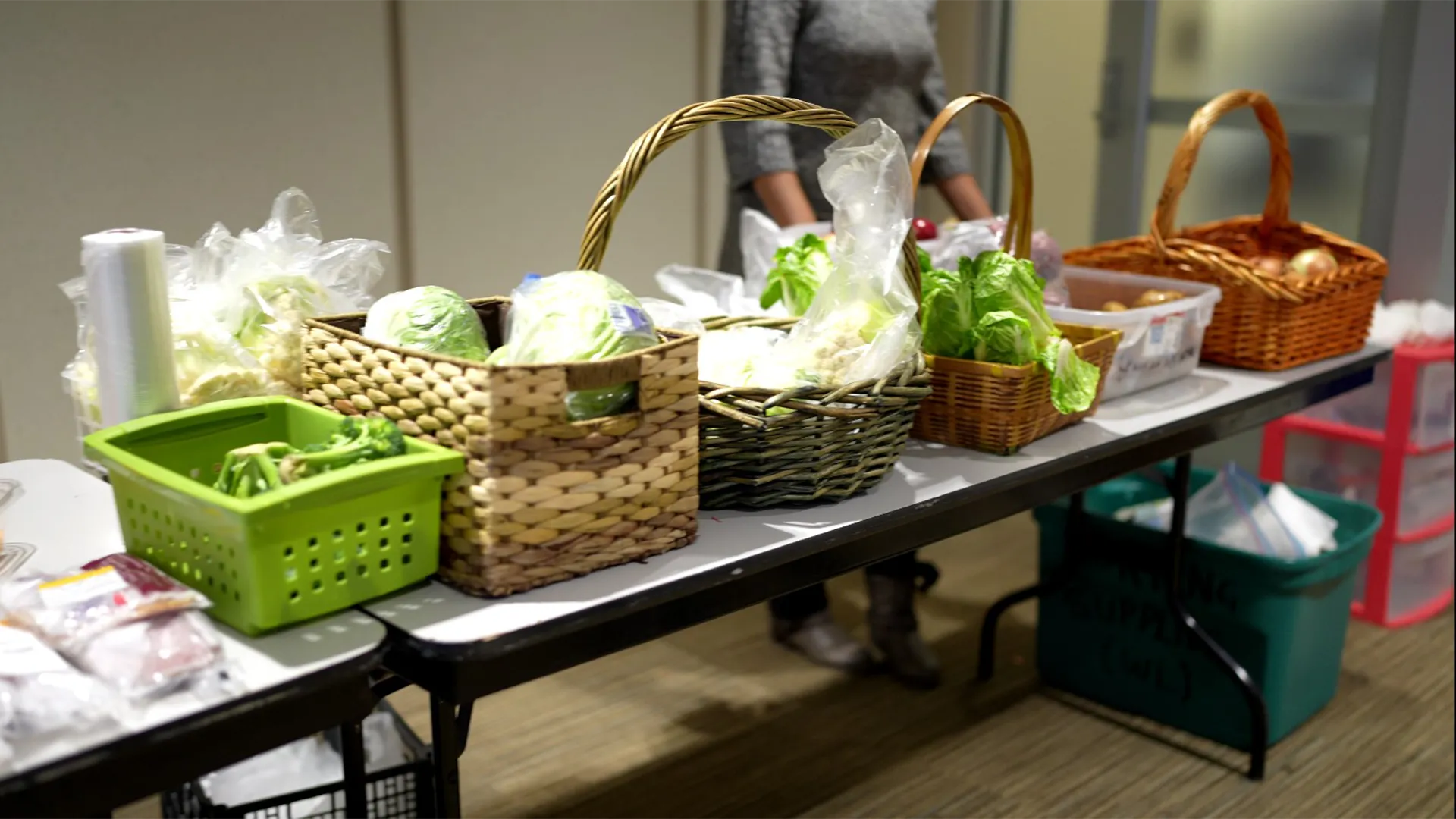
The survey also showed us where the gaps are. Fresh fruits and vegetables topped the list of requested food types (69%). Meat and protein followed (49%). Job assistance was the most-requested additional support. Housing help and transportation support came next.
When we asked what systemic change would make the biggest difference, respondents pointed clearly: higher wages (43%), more affordable housing (35%), lower grocery costs (31%), better healthcare access (28%). Transportation came up repeatedly across languages and sites.
“Hay menos discriminación racial.” — Survey respondent, Wilde Lake Interfaith Center (There is less racial discrimination [here].)
This response was offered in the space where we asked what respondents would tell policymakers, and it’s an observation about what CCC offers that other places don’t: a space where people are received without judgment, without suspicion, and without the everyday indignities that too often accompany the act of asking for help.
What Comes Next
This survey is a beginning. We’ll use it as a baseline, return to it in future collection cycles, and let it guide decisions about food sourcing, service expansion, and advocacy. If you want to be part of what happens next, you can donate to support our programs, or share these findings with your local lawmakers and leaders who can make a difference in Howard County and Maryland.